
Growth Without Guesswork
How to Build an Offer Architecture That Scales Without Burning You Out
You have already done the things you were told to do. You hired. You wrote the processes down. You delegated the work you could bear to let go of.

You have already done the things you were told to do. You hired. You wrote the processes down. You delegated the work you could bear to let go of.

Most models of business growth are drawn as a curve that climbs with revenue. Start-up, growth, maturity, expansion — each stage defined by how big the business has become. It is a tidy picture. It is also the reason so many founders cannot work out why they are stuck.

There is a particular kind of quiet that arrives on a Sunday evening when you run a business this size.

Six months ago, you hired someone to take the pressure off. You wrote the job spec, sat through the interviews, made the offer, absorbed the salary. And here you are, working the same hours you were before, only now you are also managing the person you hired to help.
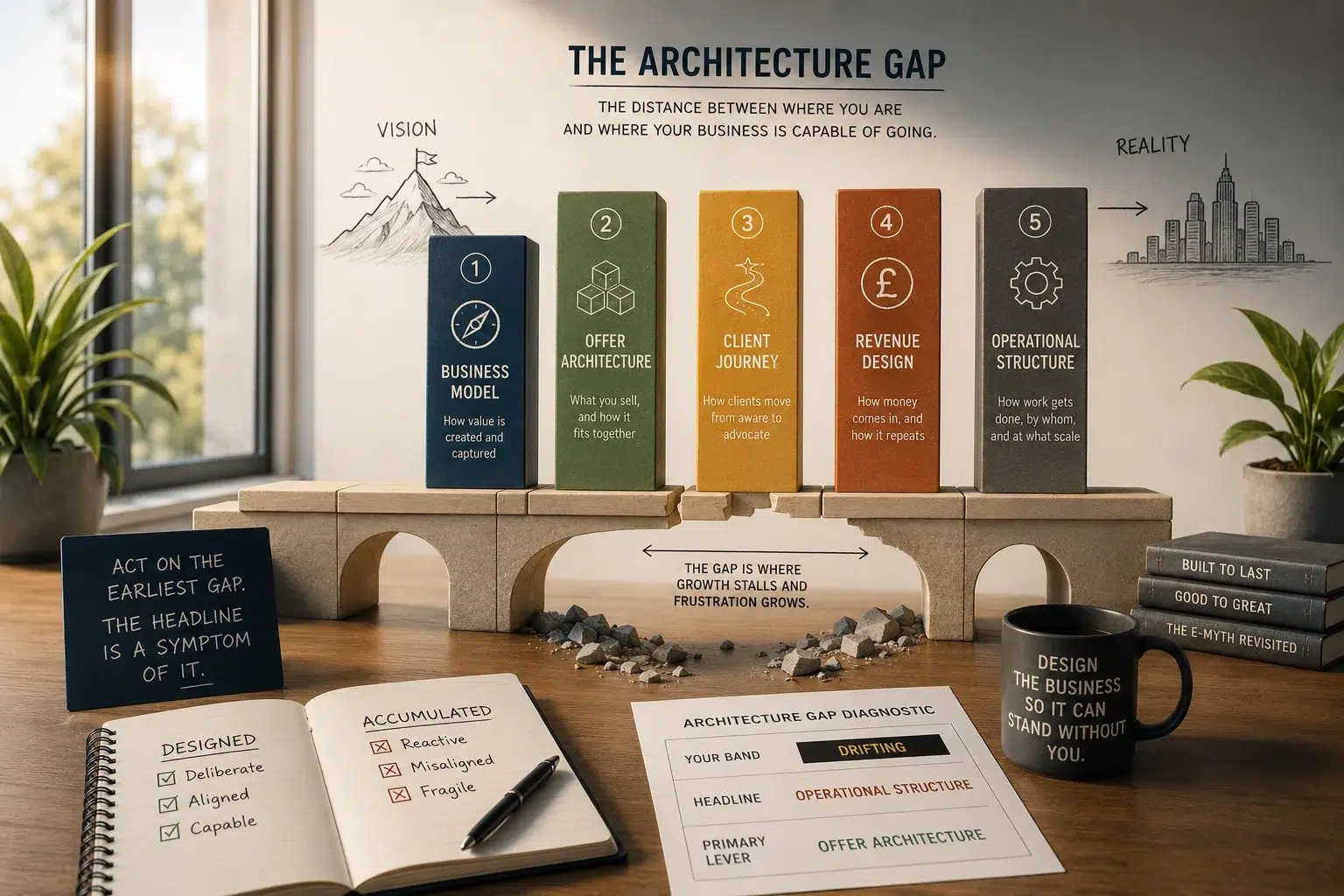
You have been diagnosed before.
There was the strategy day. The consultant with the SWOT grid. The coach who asked good questions. Perhaps a health check, an audit, a scorecard someone sent you on LinkedIn. Each one produced a list — areas marked amber and red, ranked by severity, actions
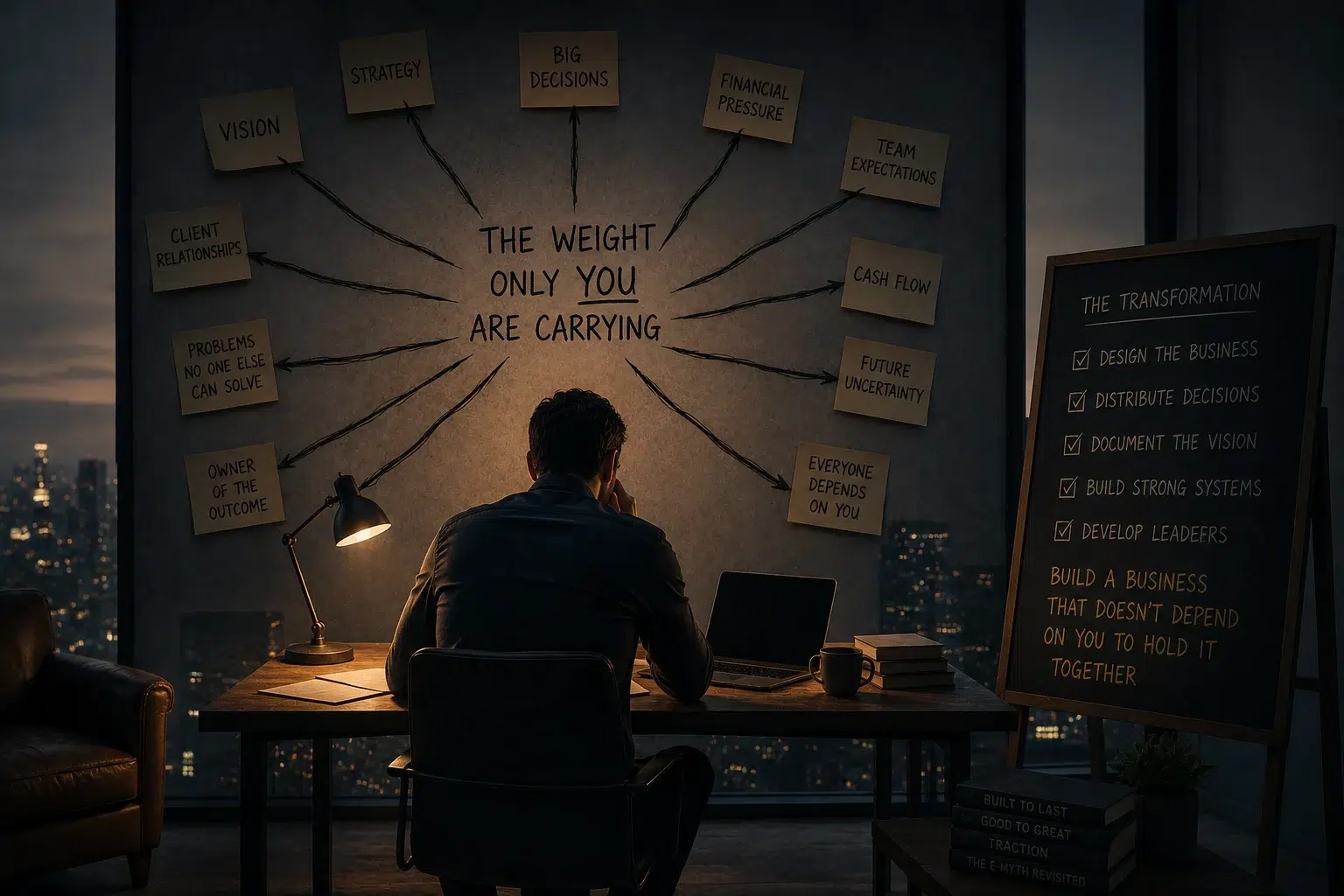
There is a particular quiet that arrives late in the day, once the last message is answered and the office empties out. Everyone has gone home believing the person at the top has it handled. And you sit there, the one who is supposed to have it handled, holding the

The numbers say the business is doing well. Turnover is up. The client list is longer than it has ever been. And yet the profit that should have followed hasn’t arrived, and you find yourself working harder to stand still.

Your revenue is higher than it has ever been. So is the number of hours you work. Somewhere between those two facts sits a business that is growing and a founder quietly wondering why it doesn’t feel like winning.

Most founders have built something that works. The uncomfortable part is admitting how little of it was ever actually decided.

Most founder-led businesses don’t stall because the founder stopped working. They stall because the business now depends entirely on that founder, and effort has never once solved a structural problem.

You have worked with a coach. You have brought in consultants when something specific needed fixing. And the business still runs on you — your judgement, your memory, the late nights spent holding the shape of it together.

The revenue is climbing. The team is larger than it has ever been. On paper, everything is working. And yet the business feels harder to run than it did when it was half the size — more reactive, more fragile, more dependent on you being available to hold it all